
We earn plenty — do we need this?
If you cannot say what your fixed-cost ratio and savings rate are, then yes. High income mostly delays the consequences of not knowing.
Industries — Dual-income professionals
Two good salaries do not automatically make a coherent financial life. Usually they make two of them, loosely connected by a rent payment.
In short
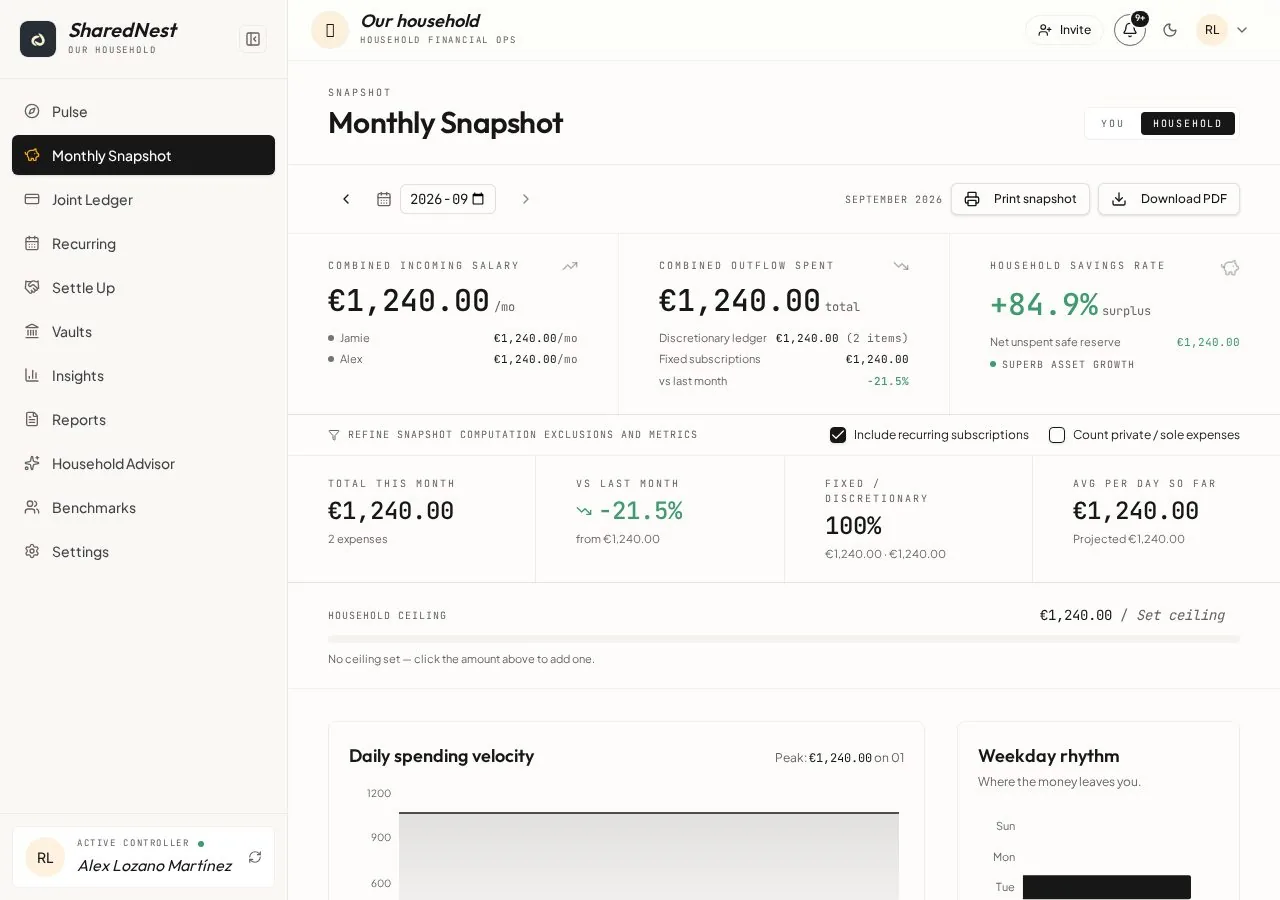
Dual-income households have enough money for the problem to be coordination rather than shortage. SharedNest splits shared costs proportionally, keeps one live balance, projects fixed commitments forward, and flags lifestyle creep — the slow rise in spending that absorbs a pay increase before it reaches a goal.
Multi-currency: euro, US dollar and pound sterling, with a base currency per household and per-member display preferences.
Spending expands quietly. Two salaries fund two sets of subscriptions, more convenience purchases and a higher baseline, and because nothing ever bounces, nobody notices that the savings rate has not moved in two years.
The fix is visibility rather than restriction. When the fixed-cost ratio and the savings rate are on screen, a new commitment gets weighed instead of absorbed.
By making entry nearly free. Receipt scanning, mobile quick-add and recurring bills mean most of the month records itself, and the reading happens once a week rather than every day.
Treat them separately from the monthly ratio. Log the month they arrive, direct a fixed percentage into goals immediately, and keep the standing split based on regular income so the arrangement stays stable.
Partly. A household has one base currency from euro, dollar or pound, and each member chooses how amounts are displayed — enough for cross-border couples paid in different currencies, provided you settle in one.
Combined net income rose from €6,000 to €6,800 over two years.
An €800 raise produced no additional saving. Visible on a recurring-bills page in one glance; invisible in a bank app forever.
If you cannot say what your fixed-cost ratio and savings rate are, then yes. High income mostly delays the consequences of not knowing.
Yes. The split rule belongs to the expense, so mixed approaches need no workarounds.
No. Expenses are entered or scanned, which keeps banking credentials out of the app and lets each expense carry its own split.
Recurring bills project forward, savings goals show time to target, and the advisor will run "what if we saved €X" against your real figures.
Free while we build — every feature included. Invite your partner and set up your household in under 5 minutes.